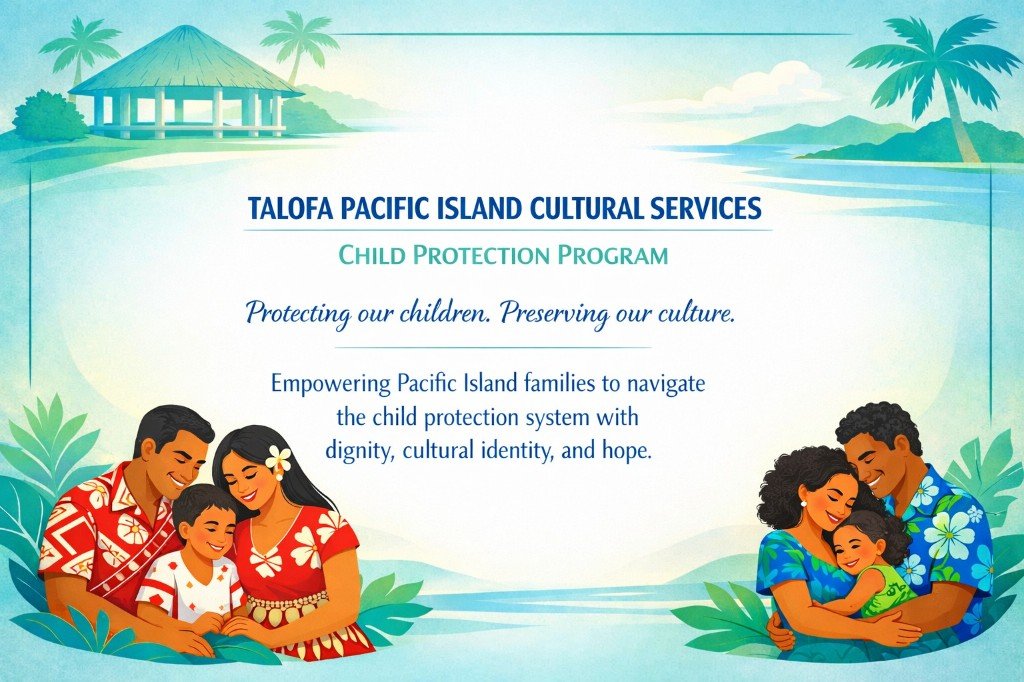
Alofa mo Tamaiti means love for children — but in Pacific cultures, alofa is deeper than love. It is compassion, responsibility, protection, and the duty to act in ways that uphold the wellbeing of children.
This program supports Pacific children and families who are experiencing stress, conflict, cultural disconnection, or involvement with Child Protection. It is guided by the Five Talofa Values:
- Alofa — compassion, protection, and responsibility
- Vā — nurturing and restoring relational space
- Tautua — serving children and families with cultural duty
- Fa’aaloalo — respect for identity, elders, and cultural roles
- Aiga — family, belonging, and collective responsibility
These values ensure every child experiences safety, cultural identity, and relational care.
Our Purpose
Alofa mo Tamaiti exists to:
- protect Pacific children from harm
- strengthen cultural identity, belonging, and dignity
- support families with respect and cultural understanding
- advocate for children within Child Protection systems
- restore and protect the Vā around children
- ensure children feel seen, valued, and culturally affirmed
This is Pacific-led, culturally grounded child protection practice.
Who We Support
We walk alongside:
- Pacific children involved with Child Protection
- families experiencing stress, conflict, or risk
- parents needing advocacy or cultural support
- children experiencing cultural harm or identity loss
- young people needing safe relational support
How We Support Families
1. Cultural Safety & Identity Support
We strengthen cultural identity through:
- cultural mentoring
- language and identity support
- involvement of elders and cultural advisors
- protecting cultural belonging
Culture is treated as a protective factor.
2. Family Support & Advocacy
We walk with families by:
- supporting parents during case plans and meetings
- helping families understand Child Protection processes
- ensuring cultural context is respected
- strengthening family capacity and safety
- advocating for children’s cultural identity
This is Tautua — serving families with dignity and cultural duty.
3. Healing & Relational Support
We restore the Vā through:
- trauma-informed practice
- emotional regulation support
- cultural grounding activities
- strength-based approaches
Healing is relational, cultural, and collective.
4. Practical Support
We provide:
- warm referrals
- safety planning
- parenting support
- connection to community services
- support navigating systems
Our Approach (Family-Friendly Version)
- Cultural welcome
- Listening to the child, family, and cultural story
- Understanding strengths, needs, and the Vā
- Creating a culturally grounded plan together
- Walking alongside the family with support and advocacy
- Regular check-ins and cultural guidance
- Cultural closure and warm referral when ready
This version keeps families safe without frightening them.
Cultural Protocols
- Prayer to open and close sessions
- Respect for all Pacific cultures
- Elders involved where appropriate
- No cultural shaming
- Protecting the Vā in all interactions
- Cultural identity treated as a protective factor
Program Outcomes
For Children
- Increased safety
- Stronger cultural identity
- Emotional support
- Clear voice in decisions
For Families
- Better understanding of Child Protection
- Stronger relationships
- Cultural support
- Improved safety and stability
For Community
- Stronger cultural safety
- Increased trust
- Better outcomes for Pacific children